

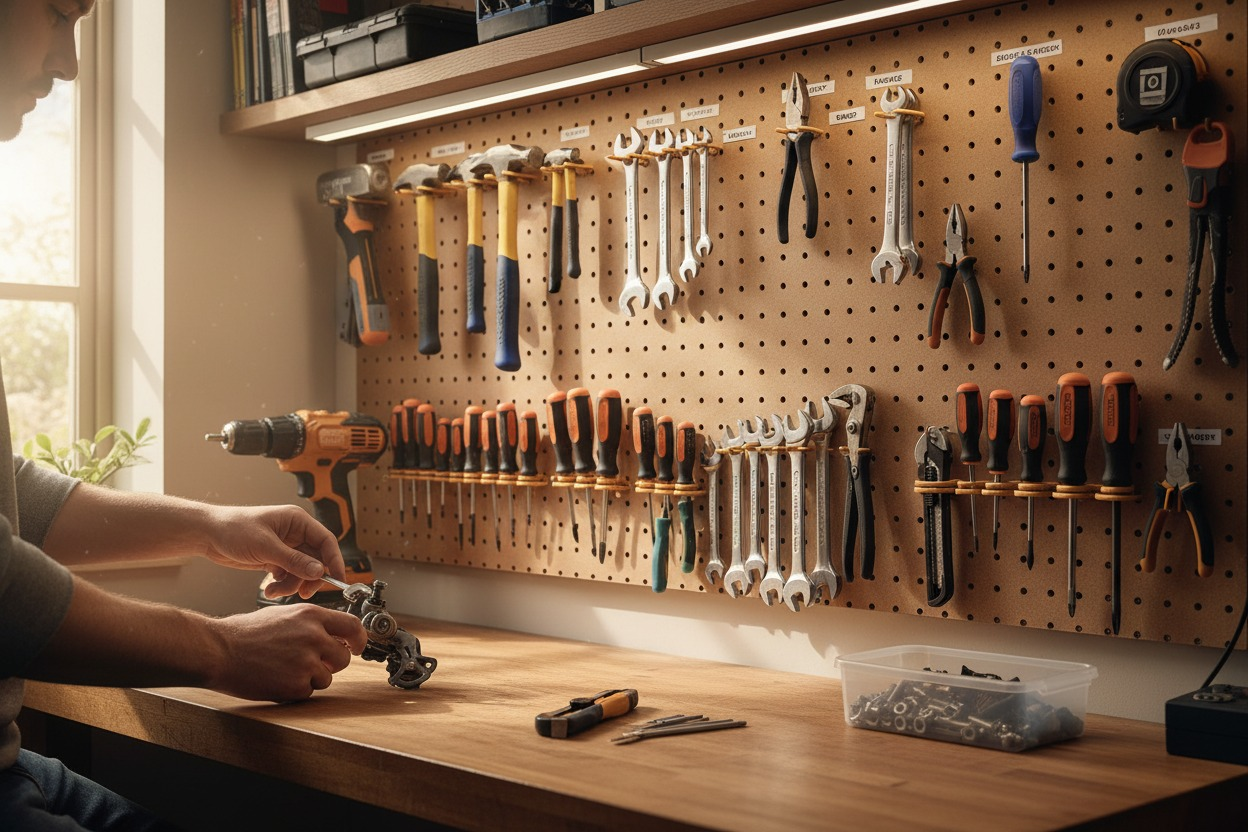
One thing I’ve learned from working, patrolling, walking, and hustling every day is this:
If you know how to fix your own stuff, you save money and you save time.
People don’t always think about the time cost of repairs. They only see the dollar amount. But time is the real killer. Driving somewhere, waiting, coming back, losing momentum — all that adds up.
That’s why I focus on fixing my own things.
When you own basic tools and know how to use them, you’re not dependent on technicians, mechanics, or shops. You decide when something gets fixed, how, and how much it costs.
That freedom matters, especially when you’re busy and moving around all day.
Example 1: Fixing Your Own Phone
I use my phone a lot — walking, patrolling, picking up recyclables. It falls. Screens crack. Batteries wear down. That’s real life.
Here’s the comparison:
Taking it to a technician:
- Drive to the shop
- Leave the phone for hours
- Come back later
- Pay a high repair price
- Lose time and productivity
Fixing it yourself:
- Order the screen or battery online
- Know where the screen sits and how the battery connects
- Fix it when the part arrives — even during a break
- Keep moving the same day
The key is understanding your own phone:
- Where the screen connects
- Where the battery sits
- What needs to come out and go back in
Once you do it once, you’re no longer guessing. You’re in control.
Example 2: Working on Your Computer
A computer is something you’re going to keep 5 to 10 years if you take care of it.
Every upgrade, every small fix — you already know what’s inside:
- You know what needs upgrading
- You know when something slows down
- You know what part needs attention
Instead of:
- Paying someone to “check” it
- Being upsold on things you don’t need
You just fix or upgrade what’s necessary.
That’s time saved. That’s money saved. And over years, that adds up big.
Example 3: How to Use a Scooter the Smart Way
Let me explain how I look at a scooter.
You can buy a simple one or a faster one — that’s not the point. The point is how you use it and how you take care of it.
A scooter is just a tool to get you from point A to point B. If you understand that, everything else becomes easier.
I don’t go deep into which scooter is better. What matters is this:
- You keep it
- You maintain it
- You fix it when something wears out
That’s how a scooter stays useful for 5 to 10 years.
Parts wear out — that’s normal. Wheels, brakes, batteries if it has one. Instead of replacing the whole scooter, you just replace the part. Parts are easy to find online, and once you’ve done it once, you already know how.
You don’t need to be in a rush. You don’t need the newest model. You don’t need to upgrade the whole thing every time something breaks.
You fix it, you keep moving, and you stay efficient.
That’s the mindset:
- Use it
- Maintain it
- Replace parts, not the whole tool
If you do that, you’ll still be using the same scooter years later — just refreshed, not replaced.
That’s how you save time.
That’s how you save money.
That’s how you stay mobile
Final Example: The Vehicle — Why I Fix My Own Car
The last and most important example is my car.
I don’t look at my car as a luxury item. I look at it as a tool. It moves me, it lets me work, and it helps me make money. That’s why it’s important for me to fix my own car instead of taking it to a mechanic every time something happens.
When you take a car to a mechanic, you’re not just paying for parts. You’re paying for:
- Labor
- Waiting time
- Diagnostics
- Appointments
- And sometimes repairs you didn’t even plan for
That’s time off the road and money out of your pocket.
The reason I keep my Honda Accord is simple:
I know how to work on it.
I know:
- How the parts come off
- How they go back on
- What usually wears out
- What I can replace myself
Because I already understand this car, I’m confident buying the same model again if I ever need to. The parts are familiar. The process is familiar. There’s no guessing and no fear.
That confidence matters, especially when you rely on your car to work. If something breaks, I don’t panic. I plan. I order the part. I fix it on my time.
For me, taking my car to a mechanic doesn’t make sense unless it’s absolutely necessary. Most of the common repairs can be handled with basic tools, patience, and a little research.
And that’s the bigger point.
The Real Lesson
Fixing your own stuff isn’t about being cheap.
It’s about being efficient.
- You save money on labor
- You save time waiting
- You learn skills that stay with you
- You stay in control of your schedule
Whether it’s your phone, your computer, your scooter, or your car, the rule stays the same