

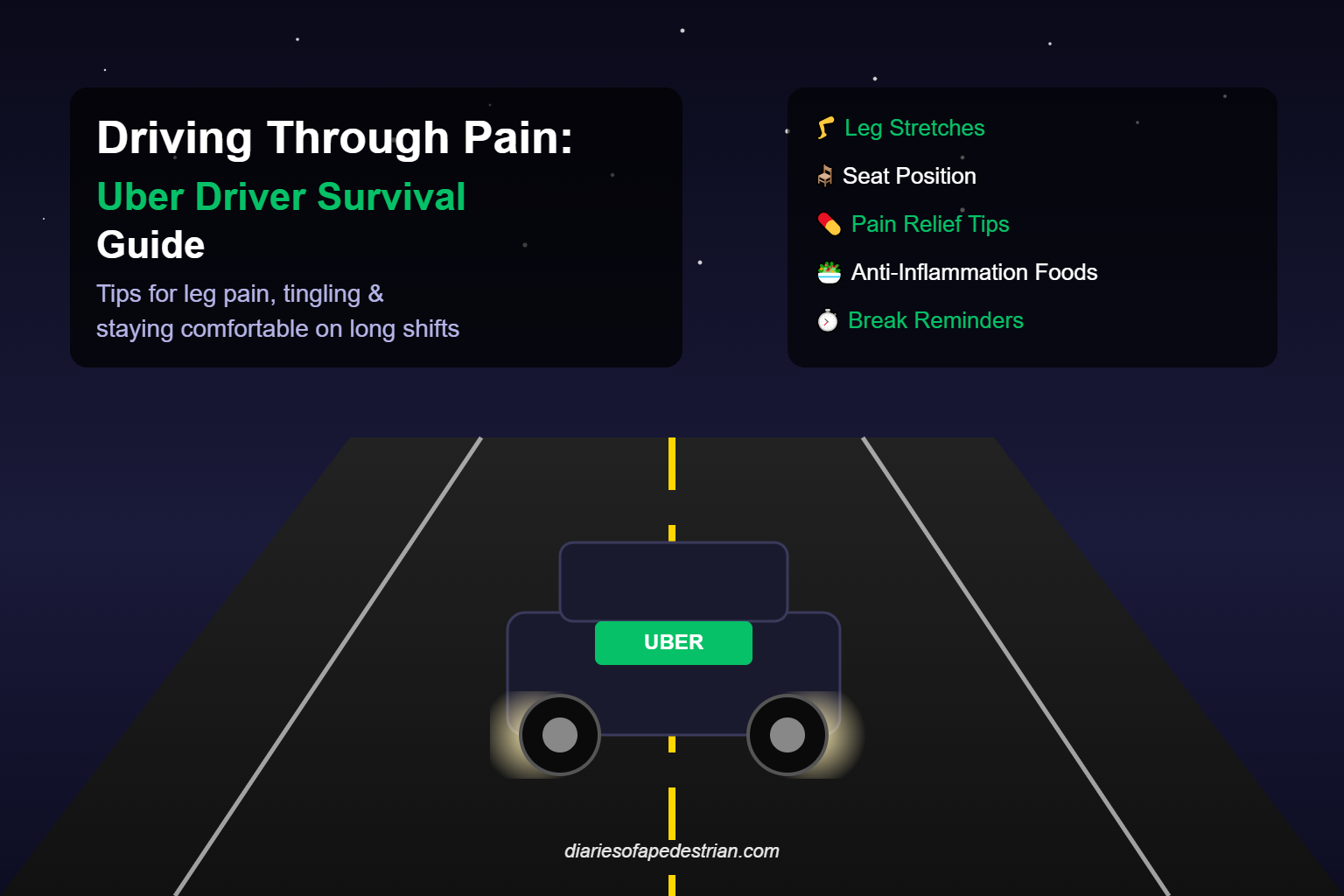
If you drive for Uber, you know the feeling. You’re a few hours into your shift, the city is quiet, and then it hits you — that familiar tingling in your right foot, or a dull ache shooting up your leg. Long hours behind the wheel aren’t just tiring. They take a real physical toll.
I’ve been driving for years. I’ve had nights where my right foot was so numb I had to shake it out at a red light. I’ve had lower back pain that followed me home and kept me up at night. And I’ve learned — the hard way — that you can do something about it.
Why Your Right Foot and Leg Tingle While Driving
That tingling sensation in your right foot is usually caused by nerve compression. When you hold the same position for extended periods — foot on the gas pedal, knee bent at the same angle — you restrict blood flow and put pressure on the sciatic nerve or the peroneal nerve running along the outside of your knee. The result? Pins and needles, numbness, or a burning ache from your hip all the way down to your toes.
For Uber drivers, this is especially common because we’re not just sitting — we’re actively pressing a pedal, which keeps one leg in constant low-level tension. Multiply that by 6, 8, or 10 hours and you’ve got a recipe for serious discomfort.
The Right Sitting Position for Long Shifts
Your seat position is everything. Most drivers sit too close to the steering wheel, which forces the knees up and compresses the backs of the thighs — cutting off circulation. Here’s what works:
Move your seat back enough so your knee has a slight bend when pressing the gas — not locked straight, not deeply bent. Aim for about 120–130 degrees at the knee joint. Your heel should rest comfortably on the floor mat, with just your toes and ball of foot controlling the pedal.
Tilt your seat slightly back — not reclined like you’re watching TV, but angled about 100–110 degrees from the seat cushion. This distributes weight more evenly across your lower back instead of loading all of it onto your tailbone and lumbar spine.
Raise the seat height if your car allows it. You want your hips to be roughly level with or slightly higher than your knees. Low seats that put your knees above your hips are brutal on the lower back over long shifts.
Use lumbar support. Most car seats have a lumbar adjustment. Dial it in so it fills the natural curve of your lower back. If your car doesn’t have one, a $20 lumbar cushion from Amazon is one of the best investments you can make as a rideshare driver.
Tips to Relieve Leg Pain and Tingling While Driving
Even with the perfect seat position, your body needs movement. Here’s what actually helps:
Switch your pedal foot occasionally. This sounds weird but it works — when traffic is light, rest your right foot flat on the floor and use cruise control for a minute. Give that leg a break.
Clench and release your calf muscles while stopped at red lights. This pumps blood through your lower legs and prevents the pooling that leads to swelling and numbness.
Roll your ankles during longer waits — 5 circles clockwise, 5 counterclockwise. Takes 20 seconds and wakes up the circulation.
Step out and stretch every 90 minutes. I know it feels like you’re losing money, but 3 minutes of stretching during a bathroom break or gas stop will save you from the pain that builds up and takes days to recover from. Do a standing quad stretch, a calf raise, and a hip flexor lunge against your car.
Try a footrest or heel pad. Some drivers swear by a small foam pad under the right heel to take pressure off the Achilles and ankle joint during long stints on the pedal.
Food Tips to Reduce Inflammation and Pain
What you eat directly affects how much inflammation you carry in your body — and inflammation makes pain worse. When I started eating smarter on my shifts, the difference was real.
Stay hydrated. Dehydration thickens the blood and reduces circulation to your extremities, making that tingling worse. Keep a water bottle in the cup holder and sip throughout your shift — not just when you’re thirsty.
Avoid fast food during long shifts. I get it — it’s easy and cheap. But processed, high-sodium food causes water retention, which adds pressure on your nerves and joints. A footlong sub or a greasy burger will have you puffier and achier two hours later.
Snack on anti-inflammatory foods. Nuts (especially walnuts and almonds), bananas, dark chocolate, and blueberries are all easy to keep in the car. They give you sustained energy without the crash and actively fight inflammation.
Consider a magnesium supplement. Magnesium deficiency is one of the most common causes of muscle cramps and nerve tingling, and most Americans don’t get enough. A daily magnesium glycinate tablet can make a noticeable difference in leg cramps within a week or two.
Cut back on caffeine overload. A coffee or two is fine. But if you’re running on energy drinks all shift, you’re dehydrating yourself and stressing your nervous system — both of which amplify pain signals.
When to Take It Seriously
Occasional tingling that goes away when you move is usually just positional — no big deal. But if you notice pain that radiates consistently from your lower back down your leg, numbness that doesn’t go away after stretching, or weakness in your leg or foot, that’s a sign of sciatic nerve compression and you should see a doctor. Driving through it without addressing it can turn a temporary issue into a chronic one.
Take care of your body. It’s the most important tool you’ve got on this job. The car can be replaced — your legs can’t.