

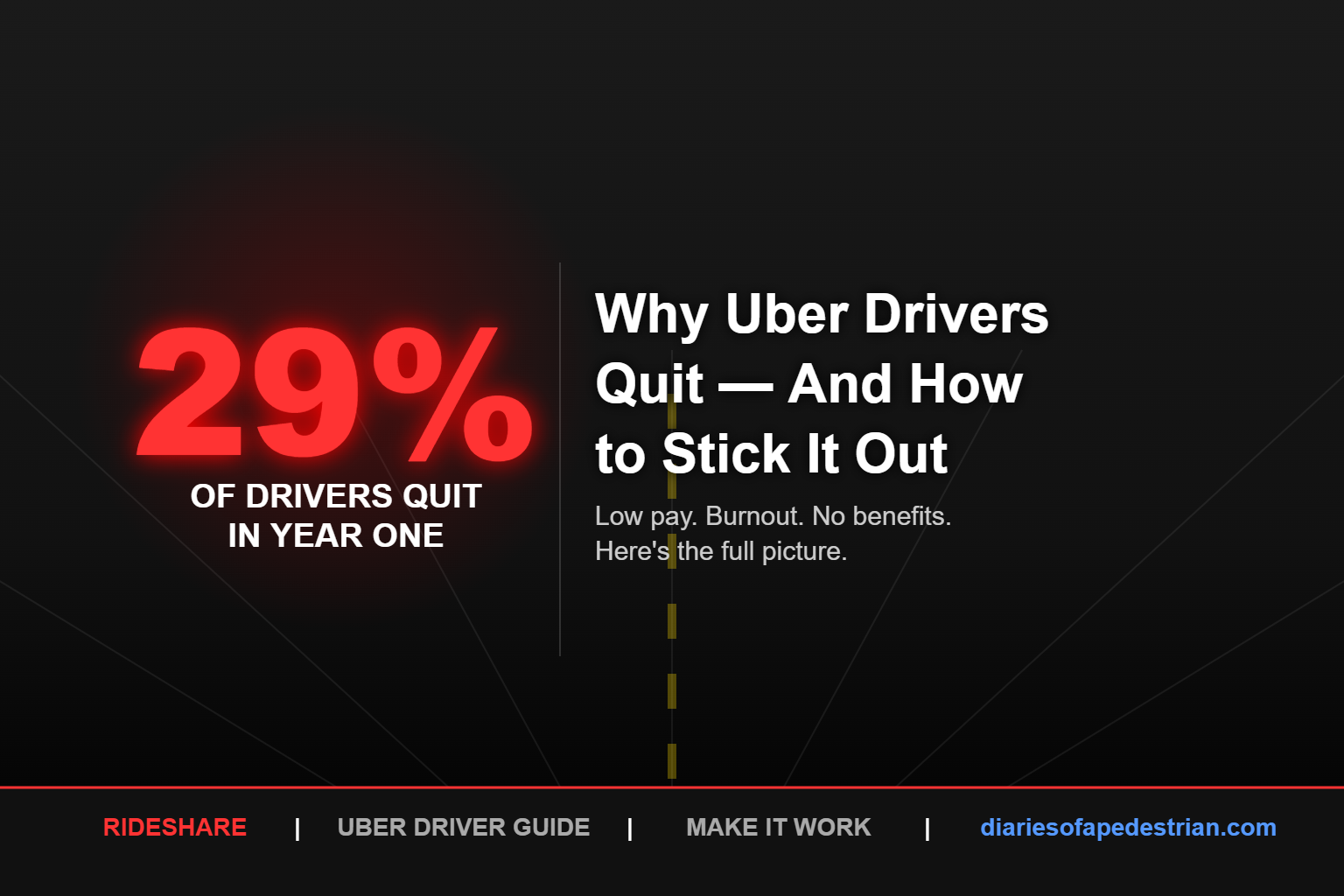
One in three. That’s how many people who sign up to drive for Uber never make it past their first year. According to industry data, 29% of US rideshare drivers quit within 12 months of starting — and when you add drivers who leave within 8 months, that number climbs even higher.
Why? And more importantly — if you’re out here grinding every day, how do you make sure you’re not one of them?
We’ve been in these streets. We know the feeling. This is the honest breakdown.
Reason #1: The Pay Isn’t What They Promised
This is the number one reason drivers walk away — and the math is brutal once you add it up.
Uber has quietly cut its per-mile rates over the years — from 99 cents per mile down to around 68 cents in many markets. Meanwhile, gas prices, insurance, and maintenance costs haven’t gone down. Drivers are doing more trips, logging more miles, and taking home less at the end of the shift.
A driver who sees “$180 earned today” on the app might take home $90–$110 after gas, wear-and-tear, and the self-employment tax hit. That’s not what the Uber ads promised. When reality hits, a lot of people tap out.
How to stick it out: Stop looking at gross earnings. Track your net profit per hour — total payout minus gas, mileage depreciation (~16–18 cents per mile), and taxes. Use apps like Gridwise or Stride to track every expense in real time. Once you know your actual hourly rate, you can make smarter decisions about when and where to drive.
Reason #2: Driving at the Wrong Times
Most new drivers make the same mistake: they drive whenever they’re free, not whenever the money is flowing. That means logging hours on slow Tuesday afternoons and missing Friday night surge pricing.
The rideshare economy has a heartbeat. Learn it. Peak hours are:
- Weekday mornings 6–9 AM — commuters, airport runs
- Weekday evenings 4–8 PM — rush hour + early dinner crowd
- Friday and Saturday nights 9 PM–3 AM — bars, events, surge central
- Special events — concerts, sports games, conventions. These are goldmines
Top earners in cities like Los Angeles consistently hit $28–$32 per hour during peak windows. Compare that to $14–$16 during dead hours. The difference between a good week and a bad week is often just timing.
Reason #3: Ignoring Multi-Apping
Relying on one app is leaving money on the table. The drivers who last — and thrive — almost always run multiple platforms simultaneously.
The strategy is called dual-apping or multi-apping: running Uber and Lyft at the same time and accepting whichever request pays better. Drivers who do this consistently report 25–40% higher hourly earnings than single-app drivers, simply because they’re never sitting idle waiting on one platform when another has a ride ready.
You can also layer in delivery apps — Uber Eats, DoorDash, Instacart — during slow rideshare periods. When rides dry up at 2 PM on a Wednesday, switch to deliveries and keep the clock running.
Reason #4: The Physical and Mental Grind
Nobody warns you about what sitting in a car for 8–10 hours a day does to your body. Lower back pain, leg numbness, poor eating habits from grabbing fast food between fares, eye strain from GPS screens — it adds up fast.
And mentally? Dealing with difficult passengers, unexpected deactivation threats, algorithm changes you can’t control — it wears you down in ways that a regular 9-to-5 doesn’t.
How to stick it out: Treat this like a business, not a hustle. Set your hours. Take real breaks — not just stopping at a light, but actually getting out of the car, stretching, eating a real meal. Drivers who last years in this game are the ones who protect their body and mind like an athlete protects theirs. We actually wrote a full guide on managing pain and leg issues while driving — worth a read if you’re already feeling it.
Reason #5: No Safety Net, No Benefits, No Stability
You’re an independent contractor. That means no health insurance, no sick days, no unemployment if the work dries up, and no protection if Uber deactivates your account tomorrow. That uncertainty is real — and for a lot of people, especially those with families, it becomes too much to absorb.
The good news here is that things are starting to shift. Massachusetts just certified the App Drivers Union — the first rideshare union in US history — and they’re heading into negotiations specifically around these issues: health coverage, deactivation appeals, wage protections. It won’t fix everything overnight, but it’s a start. Read our full breakdown here.
In the meantime: build your own safety net. Keep 3 months of expenses in a separate account. Set aside 25–30% of every payout for taxes. Don’t let a slow week become a crisis.
Reason #6: Bad Passengers and Zero Recourse
One bad 1-star passenger rating can tank your account’s standing. One false complaint can trigger a deactivation review. Drivers who don’t learn how to protect themselves from the rating system often get caught off guard and give up.
How to protect yourself:
- Keep a dashcam running at all times — it’s the single best protection against false claims
- Be polite but professional; small talk is optional, not mandatory
- Don’t accept rides you have a bad feeling about — you can cancel before pickup
- If your rating dips, contact Uber support and ask for a review. A cluster of bad ratings in a short window often signals a targeted complaint
The Real Secret to Sticking It Out
The drivers who make it past year one almost all share the same mindset: they treat it like a business, not a job.
They track expenses. They study their market. They know which neighborhoods surge and when. They stack apps. They protect their health. They save for taxes. They don’t chase hours — they chase profit per hour.
The ones who quit are usually the ones who expected it to be passive income with a steering wheel. It’s not. It’s a business that lives in your car — and like any business, it rewards the people who run it with intention.
The road is long. But so is the earning potential, if you play it right.
Still driving? Drop your biggest challenge in the comments — let’s talk strategy.